ANT PC | 05-03-2026 17:21:15

With the “NAND Crisis of 21st Century” in the play, storage and memory feel more like investment nowadays. Choosing the drive that maximizes price to performance ratio is very important, especially when we are talking about high performance storage and memory.
And the SSD here in question has all the bells and whistles you expect from a modern, current Gen SSD.

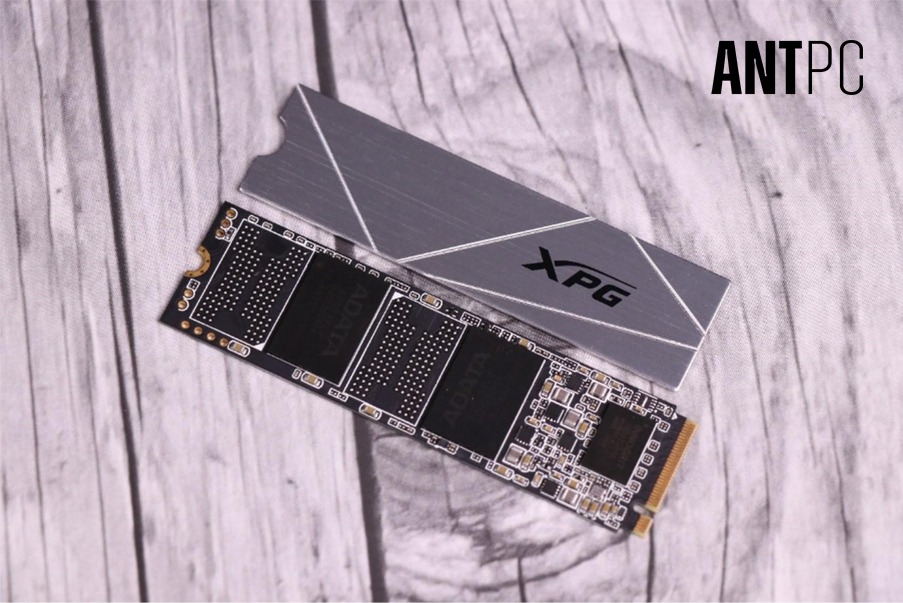
XPG Mars 980 is XPG’s answer to the bleeding edge PCIe Gen5 Storage tech. As the Gen5 bandwidth promises a 100% speed increase over the last generation; so today, at ANT PC, we put the XPG MARS 980 Blade PCIe Gen5 NVME SSD through its paces, so you won’t have to second guess to answer the question, is Gen5 SSDs worth it?

Let’s talk about the on-Paper Specs of the drive before we take a deep dive into the test data:
|
Adata XPG Mars 980 Blade Specifications |
|||
|
Product |
1TB |
2TB |
4TB |
|
Form Factor |
M.2 2280 (DS) |
M.2 2280 (DS) |
M.2 2280 (DS) |
|
Interface / Protocol |
PCIe 5.0 x4 |
PCIe 5.0 x4 |
PCIe 5.0 x4 |
|
NVMe 2.0 |
NVMe 2.0 |
NVMe 2.0 |
|
|
Controller |
Silicon Motion SM2508 |
Silicon Motion SM2508 |
Silicon Motion SM2508 |
|
DRAM |
DDR4 |
DDR4 |
DDR4 |
|
Flash Memory |
Micron 232-Layer TLC |
Micron 232-Layer TLC |
Micron 232-Layer TLC |
|
Sequential Read |
14,000 MB/s |
14,000 MB/s |
14,000 MB/s |
|
Sequential Write |
10,000 MB/s |
13,000 MB/s |
13,000 MB/s |
|
Random Read |
1,600K |
2,000K |
1,950K |
|
Random Write |
1,650K |
1,650K |
1,650K |
|
Security |
N/A |
N/A |
N/A |
|
Endurance (TBW) |
740TB |
1,480TB |
2,960TB |
|
Part Number |
SMAR-980B-1TCS |
SMAR-980B-2TCS |
SMAR-980B-4TCS |
|
Warranty |
5-Year |
5-Year |
5-Year |
Points to highlight here are
When maximum mid to high end SSDs are shifting to QLC, ADATA has equipped this drive with TLC, which in itself, promises better endurance.
The Controller is Silicon Motion SM2508, which is a very power efficient option compared to the dated Phison E26, which was riddled with overheating and performance issues.
There is a proper DDR4 DRAM Cache, instead of HMB handling the heavy lifting, which helps this drive achieve the promised 14,000 MB/s Speed and sustain it under load.
The TBWs are impressive (740TB(1TB), 1480TB (2TB) and 2960TB (4TB)) which is much higher than competition, and higher prices offerings that promise the same speed.

At ANT PC, we believe in qualitive analysis compared to a quantitative one; being said that, we put the MARS 980 Blade through most of the renowned SSD benchmarks out there, and pushing the drives limits to make decision about its stability and performance.
We tested the 1TB variant of the SSD, and here’s a detail of our Testbench:
|
CPU |
i9-13900K |
|
Motherboard |
msi Z790 Carbon WIFI |
|
RAM |
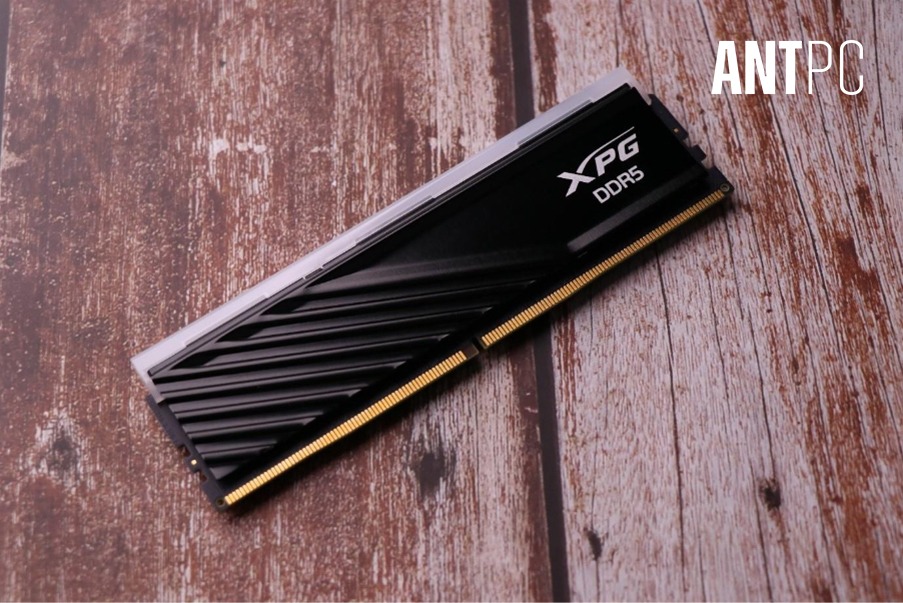
16GB 6000 MHz XPG Lancer Blade |
|
Cooler |
Ant Esports Glacius 360D AIO Cooler |
|
Power Supply |
Ant Esports FG750 V2 80 Plus Gold Modular Power Supply |
Crystal Disk Mark 9

The Crystal Disk Mark confirms the claims of XPG, the promised speed of 14,000 MB/s Read, and 10,000 MB/s Write, (in fact more than that) in random read-write tests.
ATTO Disk Benchmark:


In ATTO disk benchmark, we get Read Speed as 13,280MB/s and Write Speed as 10,460 MB/s, which is well within the tolerance and standard deviation of the promised speed by the drive.
But ATTO confirms something far more important, the drives don’t thermally throttle, at all. Which once again, justifies the choice of controller by XPG, and addition of the DRAM cache, although, the speed remains the same even if we bypass the DRAM cache in testing, and gives us the confidence to say, this drive will hold up its performance even during heaviest of workloads.
AJA System Test
Now, we’ll move on two AJA System Test, which actually helps us understand, how this drive will perform when using in Video Workstation.

In default settings, (1080i Footage, 1GB File Size and 10-bit YUV Codec) the AJA reports a read and write speeds of 10,097 MB/s and 8,895 MB/s respectively.
We verified this multiple times, and this is the score we were getting constantly, from which we can infer that the real-world parameters AJA using unlike synthetic benchmarks, the effective speed drops to about 10GB/s Write, and 8.9GB/s Read.
But, at this speed, in practical situations, this SSD will chew through any workload consistently, and the user won’t even see the difference of 10 GB/s Vs. 14 GB/s in real life.
AS SSD Benchmarks:
We ran the AS SSD benchmark in 4 different sample sizes (1GB, 3GB, 5GB, and 10GB) and this Comparison yields a very interesting set of results.

In sequential speeds, the write speed dips for 1GB sample, but the read speed goes to 8,700 MB/s but with write speed is capped to only 2480 MB/s, which can be attributed to the smaller sample size, but as we go higher with sample sizes (3GB, 5GB and 10GB) the write speed surges and saturates to about 9000-9500 MB/s, and the read speed to 8500-9000 MB/s.

Now, this deviation from the reported speed can be attributed to the testing methodology of AS SSD benchmark, or the variables it controls.
But, in the conclusion we can safely say, since in Crystal Disk Mark, the drive did reach the reported 14,000 MB/s (Read) and 10,000 MB/s (Write), and there is no reported instance of throttling (thermal or otherwise) in ATTO (which is the industry standard), these lack of speed in AS SSD and AJA can be attributed to variables and methodology.
The MARS 980 Blade is a Gen5 SSD, which offers top of the line performance for a not-so-flagship price compared to its competitors, and even in this era of convoluted prices, offer great value for your money, if raw performance is your thing.
And that brings up the obvious question; who is it for? Who requires 14,000 MB/s or 10,000 MB/s of speed?
Well, if you’re a gamer, or a casual user, there will be absolutely no difference in your case even if you compare the system’s performance to a high-end Gen3 or a mid-end Gen4 SSD.
But, if you’re a power user, who’s dealing with heaps of data, larger files, like a videographer, content creator, VFX artist, a composer who works with advanced DAWs and complex plugins, LLM Trainer or someone moving very large files (100s of GBs) around, this drive will significantly cut down your output time.
The only negative point that I can think of is the high cost of early adoption; because this is significantly cheaper than even the highest end of Gen4 SSDs, and not just that, you do need a Gen5 capable Motherboard and CPU to get the desired speed out of this drive. So, if you’re considering building a new system desiring the Gen5 speed, you will be paying a premium.
In that case, visit www.ant-pc.com to get the craziest deals on Workstations, Servers and Gaming PCs in India!
But if you already have a Gen5 capable system, go ahead! This will feel like installing a nitro in your shiny new muscle car!

Find the perfect setup to accelerate innovation in AI and computing.

Our agents and experts are always looking forward to assist you. If you wish to communicate something or facing any issue, please call on our helpline number.
.png)
Build. Save. Customize.
 OTP secured
 No spam, ever