ANT PC | 11-03-2026 13:32:31

As the storage devices started to shrink in the last decade, along with internal, and primary storages, we also got external storage devices; starting with memory cards and pen drives, the early forms flash memory on the go.
When solid state drives became mainstream, the low power compulsion, higher physical shock resistance, and durability made them the perfect choice for portable storage solutions. And today, with the evolution of NAND flash and USB Bandwidth, an external SSD offers three crucial things for data storage, Speed, Portability and Capacity.
 In a world of external drives, the ADATA SE880 is a solid new candidate, that can give it’s competitors a serious run for their money, as we will show this in the performance section, but before that, let’s take a quick look at the specifications:
|
Parameter |
Value |
|
Color |
Titanium Gray / Blue |
|
Capacity |
500GB / 1TB / 2TB / 4TB |
|
Dimensions (L x W x H) |
64.8 x 35 x 12.25mm / 2.55 x 1.38 x 0.48inch |
|
Weight |
31g / 1.1oz |
|
Interface |
USB 3.2 Gen2 x2 Type-C (USB 20Gbps) |
|
Sequential Read (Max*) |
Up to 2000 MB/s |
|
Sequential Write (Max*) |
Up to 2000 MB/s |
Points to highlight here are
6.5cm x 3.4cm x 1.22cm dimensions, and just 31g weight makes this drive one of the tiniest in this segment, and the 31g weight makes it barely feels to take up any space at all.

Although, portable external SSDs are not essentially a part of a content creation system, but it fits beautifully within the workflow of any creative professional, someone who is moving data around offline.
So, at ANT PC, we tested this as a kind of an optional accessory, something you can use as a reliable external storage solution. Here’s a detail of our test bench.
|
CPU |
i9-13900K |
|
Motherboard |
msi Z790 Carbon WIFI |
|
RAM |
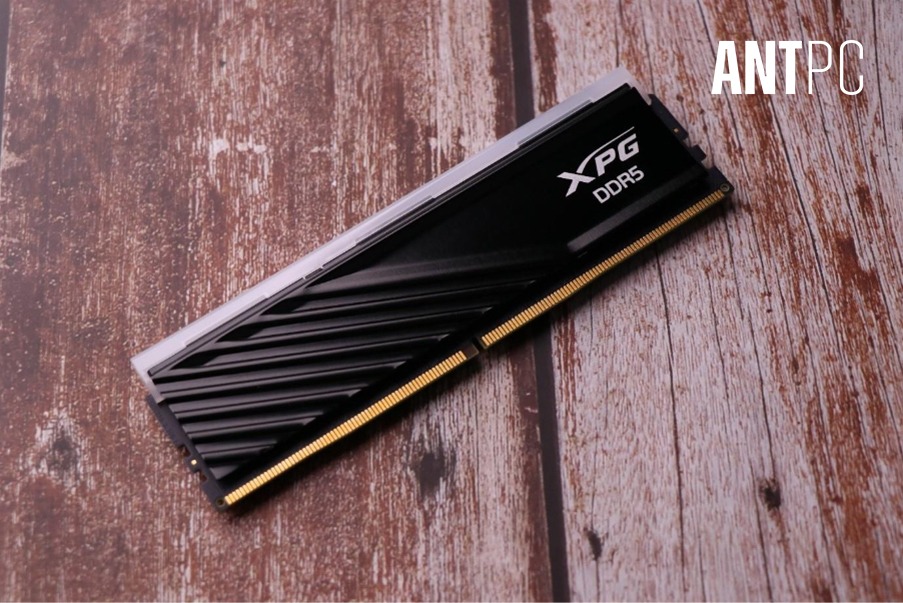
16GB 6000 MHz XPG Lancer Blade |
|
Cooler |
Ant Esports Glacius 360D AIO Cooler |
|
Power Supply |
Ant Esports FG750 V2 80 Plus Gold Modular Power Supply |
Crystal Disk Mark 9

Crystal Disk Mark 9 shows the read speed of 2000 MB/s, although the write speed dips a little below 2000, by 1863 MB/s is well within the standard error margins and tolerances, so that is nothing significant to mention.
What matters is the sustainable transfer speeds, when data is being read or wrote from the drive. For that, we will be using the ATTO Disk Benchmark to points out any throttling (thermal or otherwise).


In ATTO Disk Benchmarks, we get the sustained read speed of 1.93 GB/s and 1.73 GB/s in the two iterations, enabling and disabling the write cache for each instances.
The ATTO results show no sign of throttling, so it is expected that the drive will sustain its transfer speed during longer operations.
SE880 is a compact little device, particularly useful for creative professionals on the go. It delivers its promised speeds, and in synthetic benchmarks, do not show any kind of transfer throttling.
But real-world use cases will be different. The drive uses the USB 3.2 Gen 2x2 protocol over Type-C connector; so, to get the full speeds and sustained performance, your device must be supporting the protocols too.

Since USB device are backwards compatible, and there is an USB C to A cable is supplied in the box, using that makes the device more versatile, but limits its speed to USB 3.2 Gen 1 protocols, and the promised read/write speeds will not hold up in that case.
Also, the speed will greatly depend on the kind of file you’re transferring; for larger files, the reported speeds will hold consistently (over an USB 3.2 Gen 2x2), but for smaller files in high quantity, the speeds will vary, and that is just a universal truth for external storage. But, like I said, you need a device that supports the USB 3.2 Gen 2x2 protocol.
If you need such an device, visit www.ant-pc.com to get the craziest deals on Workstations, Servers and Gaming PCs in India!

Find the perfect setup to accelerate innovation in AI and computing.

Our agents and experts are always looking forward to assist you. If you wish to communicate something or facing any issue, please call on our helpline number.
.png)